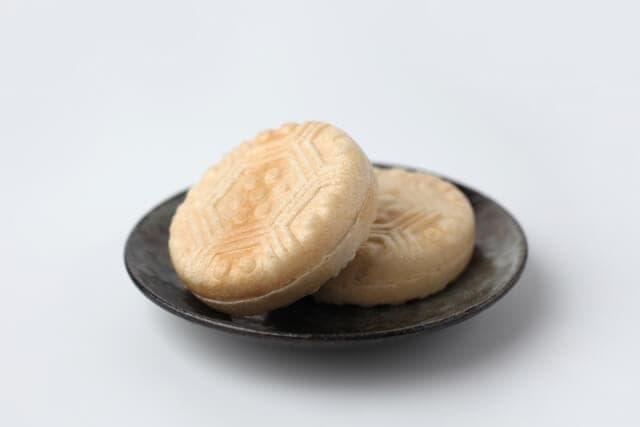
Monaka is a Japanese confectionery of red bean paste sandwiched between mochi or rice flour skins that has an aroma of the sweetness of rice.
Monaka is a traditional Japanese confectionery consisting of red bean paste sandwiched between thin, crispy skins made from mochi or rice flour. Its origins trace back over a thousand years to the Heian period, deriving its name from the poem "Monaka no Tsuki" by Minamoto no Shitago, where mochi sweets were served during a moon-viewing banquet. Originally, monaka were round and thin, resembling the full moon. In the mid-Edo period, vendors in Yoshiwara sold a version without red bean paste, which later evolved to include it, becoming the standard.
With advancements in mold technology in the Meiji period, monaka diversified into various shapes and flavors, including modern adaptations like ice cream and even chocolate-filled versions. A typical monaka offers 284kcal per 100g, higher than other traditional sweets like dorayaki and daifuku when measured per piece, making it a calorie-rich but nutritious option due to its high fiber and low-fat content.
Today, monaka comes in numerous creative forms, patterned after animals, flowers, and landmarks, and filled with flavors ranging from traditional anko to Western-fusion varieties. Specialty shops continue to innovate with unique offerings, maintaining monaka's popularity as a versatile and beloved Japanese sweet.