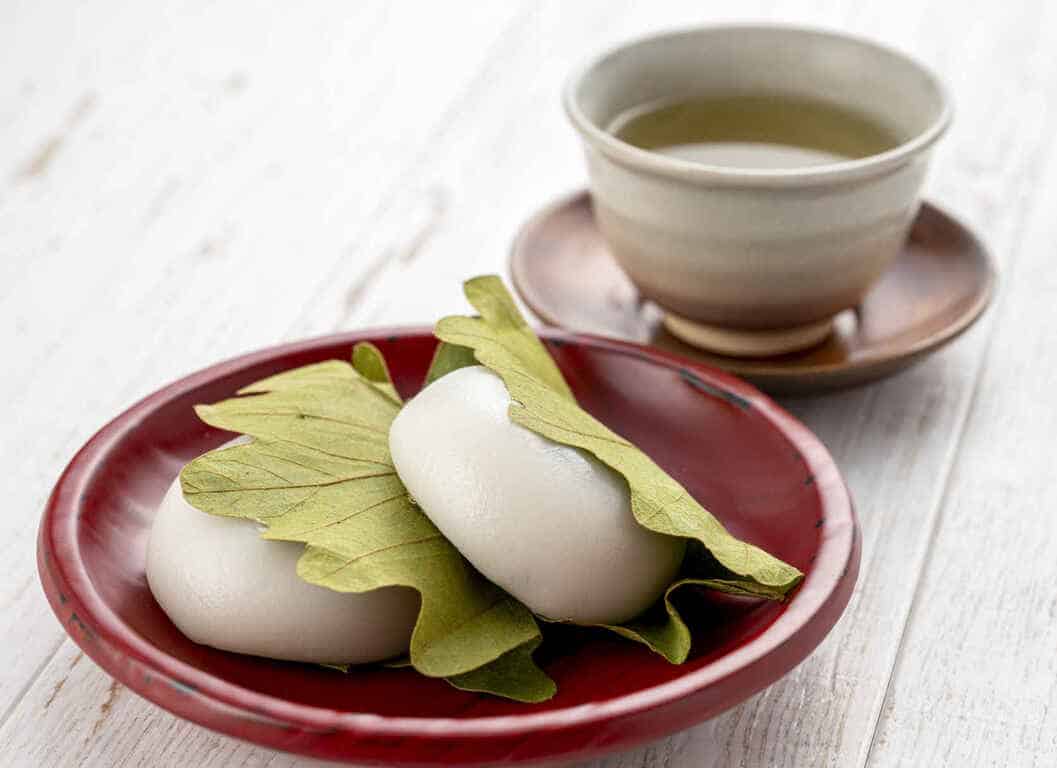
Kashiwa Mochi is a Children's Day food. It's a kind of mochi with sweet red bean paste filling and wrapped with Kashiwa leaves.
In Japan, mochi is a significant cultural element with various types tailored for different occasions. One notable variety is Kashiwa Mochi, associated with Children’s Day on May 5th. Kashiwa Mochi features white mochi filled with sweet red bean paste and wrapped in Kashiwa (oak) leaves, which are considered auspicious as they remain on the branch until new shoots grow, symbolizing prosperity for future generations.
Kashiwa Mochi, originating during the Edo period, is especially popular in the Kanto and Kansai regions. It is traditionally homemade but also sold by renowned confectionery shops like Taneya and Toraya during April and early May. Alongside mochi, the Children's Day celebrations include flying carp streamers (Koinobori) that symbolize courage, decorating with May dolls and armor, and other activities. Moreover, the day honors children's personalities and thanks both parents.
The symbolic and cultural significance of Kashiwa Mochi extends beyond its taste, as it represents well-being, prosperity, and family unity, forming an integral part of Japanese festivities. Despite its popularity in stores, homemade Kashiwa Mochi remains a cherished tradition during family gatherings on this national holiday.