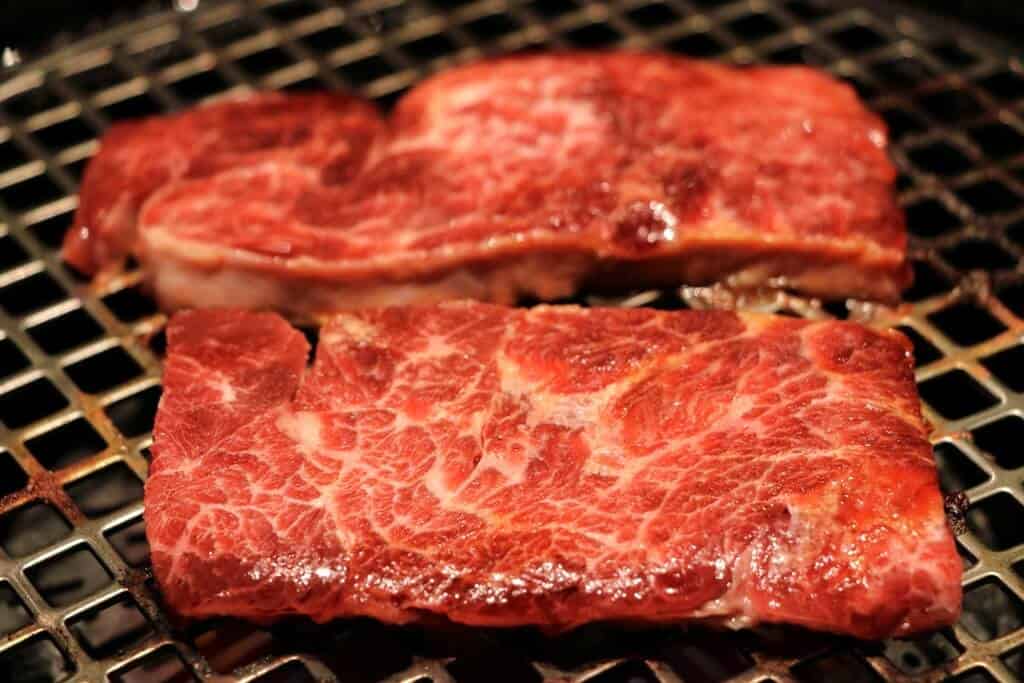
Karubi, also known as boneless short rib or flanken-cut rib, is highly favored in yakiniku for its tenderness and rich juiciness.
The article explores the traditional Japanese dish of karubi, a popular cut of beef known for its tenderness and rich marbling, commonly used in yakiniku, or Japanese barbecue.
Originating from Korean cuisine, the term "kalbi" or "karubi" refers to beef short ribs, typically prepared boneless in Japanese culinary styles.
These ribs are often seasoned or marinated with sauces like Saikyo miso to enhance their sweet and savory flavors.
Karubi's intricate marbling makes it a standout choice for grilling, with recommended techniques suggesting an 80/20 cooking method for optimal flavor.
The article highlights regional variations in cooking and serving styles, such as the preference for charcoal grilling in Kansai versus conventional grilling in Kanto, and different pairings with offal and sauces.
Various cuts of karubi, like sankaku karubi and misuji, are prized for their distinct textures and flavors.
The dish's versatility extends beyond yakiniku; it's used in hotpots, stir-fries, and is a staple in social dining experiences, such as izakayas.
The piece concludes by emphasizing karubi's significance in Japanese dining culture and encourages readers to explore other Japanese culinary delights, suggesting a broader appreciation of the country's rich food traditions.